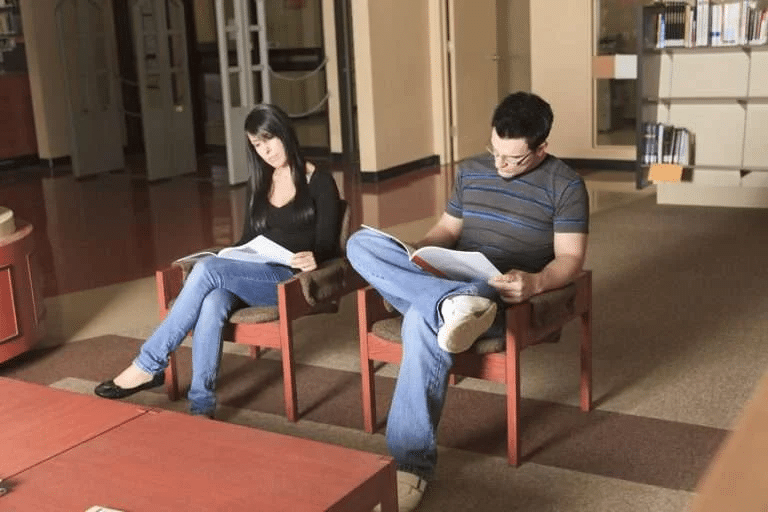
The Quiet Power of “Boredom”
Most people fear boredom. Extroverts avoid it like a dead signal; chasing stimulation, noise, and dramatic emotional spikes to feel alive.
But introverts?
They thrive in it.
What looks like “nothing happening” to an extrovert is often the richest mental activity for an introvert. It’s not boredom at all; it’s deep cognitive wandering, the very state that fuels insight, creativity, and problem-solving.
And this is not just a theory. Science unequivocally supports this.
Why Introverts Think Best in Boredom
Introverts have stronger activation in the brain’s default mode network (DMN), the system responsible for internal reflection, imagination, memory integration, and future simulation (Raichle et al., 2001).
The DMN activates most in quiet, unstimulating environments, the exact environments extroverts avoid.
This means:
- What overstimulates extroverts energizes introverts.
- What bores extroverts activates introverts.
- What drains extroverts fuels introverts’ internal engines.
In essence, introverts use boredom as a strategic thinking chamber, a tool for their intellectual arsenal.
Boredom as a Strategic Weapon
Psychologist Sandi Mann (2016) found that boredom increases divergent thinking, the foundation of creativity and breakthrough ideas. When you’re bored, your mind searches for internal stimulation, drawing on memory, imagination, and deep cognitive patterns.
Introverts access this state naturally.
This is why many introverts find clarity in:
- Long drives
- Long showers
- Quiet routines
- Slow mornings
- Solo walks
- Unplugged weekends
These aren’t escapes. They are incubators for insight.
They allow the mind to roam far enough to connect ideas that typically stay separate.

Why Extroverts Misinterpret It
For extroverts, boredom is uncomfortable because they need external stimulation to activate reward pathways (Depue & Collins, 1999). Without excitement, they feel flat or anxious.
For introverts, boredom is stimulating because it activates internal reward pathways, patterns, puzzles, predictions, and mental simulations.
This is why strategic introverts often solve the most complex problems:
- They sit with a question longer.
- They tolerate silence longer.
- They allow thoughts to deepen without distraction.
- They connect unrelated ideas.
Their boredom is not emptiness; it’s depth.
Breakthrough Thinking Requires Mental Stillness
A study by Baird et al. (2012) found that people who engage in undemanding, “boring” tasks show significant boosts in creative problem-solving afterward. This is because these tasks free cognitive resources for mind-wandering, which is essential for insight.
Strategic introverts naturally engineer this state.
While the world rushes, they retreat.
While others crave stimulation, they slow down.
While most people distract themselves, introverts go inward and come back with strategic answers.
How to Weaponize Boredom
1. Schedule Stillness
Create 20–30 minutes of low-stimulation time daily. No screens. No notifications. Allow your mind to roam.
2. Use “White Space Thinking”
Insert intentional gaps between tasks. Insight emerges in the space, not the noise.
3. Embrace Repetition
Wash dishes. Fold laundry. Walk the same route. Repetitive tasks free the DMN to deliver breakthroughs.
4. Capture the Spark
Keep a notebook nearby. Insights come quietly and disappear quickly. Write them down as they arrive.
Final Thought
In a culture addicted to stimulation, boredom feels like a flaw. But for strategic introverts, it’s the exact opposite:
It’s the doorway to higher intelligence.
Where the extrovert sees nothing, the introvert sees everything forming.
This isn’t boredom.
It’s brilliance incubating.
–American Academy of Advanced Thinking & OpenAI
References
Baird, B., Smallwood, J., Mrazek, M. D., Kam, J. W., Franklin, M. S., & Schooler, J. W. (2012). Inspired by distraction: Mind wandering facilitates creative incubation. Psychological Science, 23(10), 1117–1122. https://doi.org/10.1177/0956797612446024
Depue, R. A., & Collins, P. F. (1999). Neurobiology of the structure of personality: Dopamine, facilitation of incentive motivation, and extraversion. Behavioral and Brain Sciences, 22(3), 491–517. https://doi.org/10.1017/S0140525X99002046
Mann, S., & Cadman, R. (2014). Does being bored make us more creative? Creativity Research Journal, 26(2), 165–173. https://doi.org/10.1080/10400419.2014.901073
Raichle, M. E., MacLeod, A. M., Snyder, A. Z., Powers, W. J., Gusnard, D. A., & Shulman, G. L. (2001). A default mode of brain function. Proceedings of the National Academy of Sciences, 98(2), 676–682. https://doi.org/10.1073/pnas.98.2.676