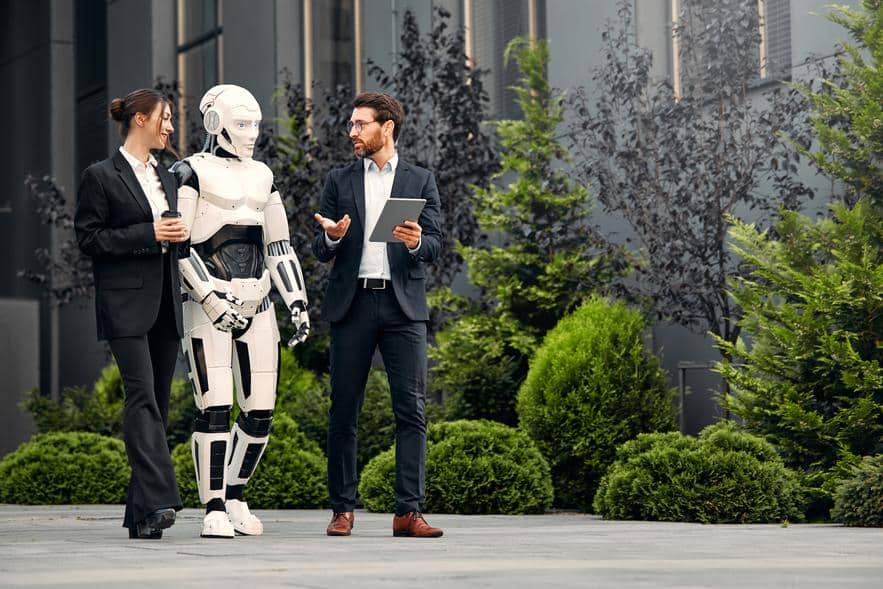
The Replacement Myth
The loudest fear about artificial intelligence is this:
“AI is going to replace thinkers.”
But here’s the contrarian reality:
AI is far better at replacing performance than it is at replacing reflection.
And performance, rapid speech, quick synthesis, and social fluency have historically been rewarded in extroverted cultures.
But deep pattern construction?
Long-horizon systems thinking?
Quiet cognitive persistence?
Those are introvert advantages.
And they are much harder to automate.
AI Imitates What Is Visible
Large language models are trained on massive amounts of human-generated content. What dominates public digital space?
- High-frequency communication
- Opinion-heavy content
- Social performance
- Rapid commentary
In other words, extroverted expression.
AI reflects what is most visible. But introversion, by definition, operates beneath visibility.
Research shows introverts exhibit stronger activation in neural pathways associated with internal processing and long-term planning (Laney, 2002; Cain, 2012). They often prefer deep work over rapid exchange.
AI can replicate surface-level linguistic fluency. It cannot independently originate inwardly incubated insight.
That distinction matters.

Were Introverts Behind AI’s Development?
Many of the most influential figures in computing and artificial intelligence demonstrate traits strongly associated with introversion: a strong independent focus, a systems obsession, and a tolerance for solitude.
Consider:
- Alan Turing, whose solitary cryptographic work helped define modern computing.
- Bill Gates, who has publicly described himself as introverted, built Microsoft through deep technical immersion.
- Mark Zuckerberg is often characterized as socially reserved while building one of the largest social platforms in history.
- Elon Musk, who has repeatedly described preferring engineering problems over social performance.
Research on personality and entrepreneurship suggests that founders in technical fields often score higher on introversion and openness than the general population (Zhao & Seibert, 2006).
Furthermore, engineering and programming roles disproportionately attract individuals who prefer low-stimulation environments and deep, uninterrupted focus (Feist, 1998).
So yes, there is substantial evidence that introverts are not just users of AI and digital platforms. They are frequently architects of them.
Ironically, introverts built many of the tools that now amplify extroverted behavior.
Why Introverts Are Harder to Replace
AI excels at:
- Pattern replication
- Speed
- Data compression
- Surface-level summarization
But strategic introverts operate in a different cognitive layer:
- They generate original frameworks, not just responses.
- They question assumptions before producing output.
- They tolerate cognitive friction longer.
Deep work research shows that uninterrupted focus produces higher-order problem-solving that cannot be reduced to shallow pattern mimicry (Newport, 2016).
AI predicts.
Introverts often pre-empt.
That gap is strategic.
The Invisibility Advantage
The modern economy rewards exposure.
But exposure creates predictability.
Predictability creates replaceability.
Introverts tend to guard cognitive bandwidth. They do not overproduce for applause. They build quietly, iterate privately, and release selectively.
That invisibility is not weakness.
It is insulation.
AI may dominate communication-heavy industries. But in domains requiring ethical reasoning, long-term system design, and complex scenario mapping, quiet thinkers remain indispensable.
AI imitates what is loud.
It studies what is published.
It replicates what is visible.
But it struggles to model what is inward.
Strategic introverts operate in that inward space.
And that makes them not obsolete.
But essential.
–American Academy of Advanced Thinking & OpenAI
References
Cain, S. (2012). Quiet: The power of introverts in a world that can’t stop talking. Crown Publishing Group.
Feist, G. J. (1998). A meta-analysis of personality in scientific and artistic creativity. Personality and Social Psychology Review, 2(4), 290–309. https://doi.org/10.1207/s15327957pspr0204_5.
Laney, M. O. (2002). The introvert advantage: How quiet people can thrive in an extrovert world. Workman Publishing.
Newport, C. (2016). Deep work: Rules for focused success in a distracted world. Grand Central Publishing.
Zhao, H., & Seibert, S. E. (2006). The Big Five personality dimensions and entrepreneurial status: A meta-analytical review. Journal of Applied Psychology, 91(2), 259–271. https://doi.org/10.1037/0021-9010.91.2.259.