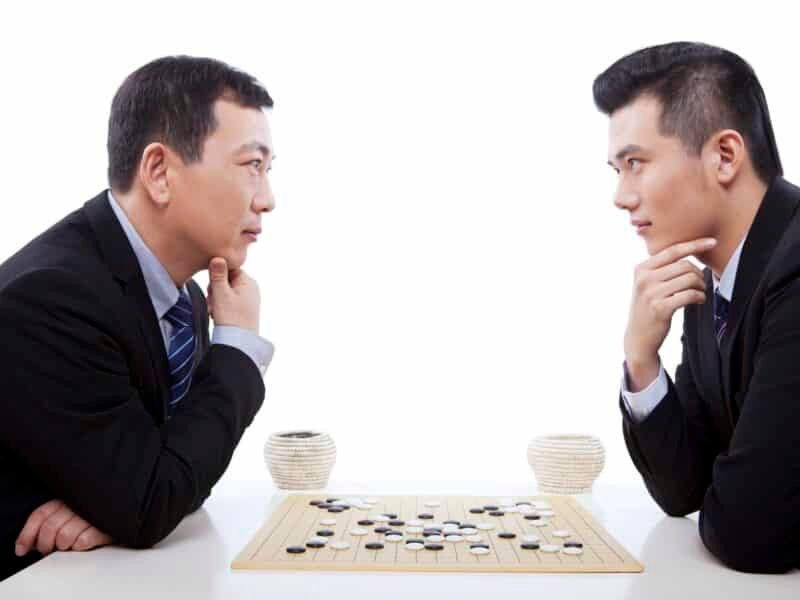
The Death of Reflection
The modern world no longer rewards thinking.
It rewards speed in fast opinions, fast stimulation, and fast reactions.
The average person no longer pauses long enough to think deeply before reacting emotionally.
And that is not accidental, because modern systems are increasingly optimized for engagement rather than reflection.
Because reflective people pause as reactive people click.
The Attention Economy Is a Cognitive War
Social media platforms, algorithmic feeds, AI-driven recommendations, and digital advertising systems are designed to capture and hold human attention.
Research in behavioral psychology and persuasive technology shows that variable-reward systems, similar to those in slot machines, significantly increase compulsive engagement behaviors (Alter, 2017).
In other words, modern technology profits from fractured attention.
And fractured attention destroys deep thought.
Reaction Has Become a Business Model
Most platforms no longer reward wisdom.
They reward emotional velocity.
Research on online behavior shows that emotionally charged content spreads faster and more widely than reflective or nuanced information (Brady et al., 2017).
This creates a dangerous cultural shift:
- Thinking becomes too slow
- Nuance becomes too weak
- Reflection becomes invisible
The loudest reaction now wins the algorithm over the clearest thought.
Why Introverts Matter More Than Ever
This is where introverts become culturally important.
Not because introverts are morally superior, but because many introverts are naturally structured against overstimulation.
Research on the cortical arousal theory suggests that introverts tend to prefer lower-stimulation environments due to heightened sensitivity to external stimuli (Eysenck, 1967).
That matters profoundly in a hyperstimulated society.
While others compulsively consume noise, introverts often retreat from it.
And retreat allows for wider mental space.

The Return of the Countercultural Thinker
In previous eras, intellectualism was associated with prestige.
Today, reflection often looks inefficient.
The person who pauses before responding appears slower than the person reacting instantly online.
But strategic thinking has always required delay.
Research on cognitive reflection shows that individuals who resist impulsive responses make more accurate and rational decisions over time (Frederick, 2005).
The introvert advantage is not merely silence; it is resistance to immediacy.
The Strategic Introvert as Cognitive Dissenter
Modern culture pressures people to:
- Constantly share
- Constantly react
- Constantly perform
Introverts often resist this instinctively, which becomes a strategic advantage.
Distance creates perspective.
When you step outside the emotional current of the crowd, you can finally observe the system itself.
That is where strategic thinking begins.
The AI Era Changes Everything
Artificial intelligence amplifies this divide.
AI can generate instant responses, instant summaries, and instant stimulation.
But instant output is not the same as wisdom.
As AI accelerates reaction culture, human value may increasingly shift toward:
- Judgment
- Pattern recognition
- Long-term reasoning
- Ethical reflection
- Systems thinking
In other words, the future may reward the exact capacities modern culture is eroding.
The world currently does not publicly reward deep thinking.
But civilization still depends on it privately.
Behind every major system are people who think longer than the crowd, such as:
- Engineers
- Architects
- Researchers
- Strategists
- Quiet builders
And many of them operate like introverts, who are detached from noise, focused on structure, and committed to depth.
The Strategic Introvert Blueprint
If you want to preserve your thinking in a reaction-based culture:
- Protect uninterrupted solitude
- Reduce algorithmic overstimulation
- Read longer-form material
- Delay emotional reactions
- Practice structured reflection
- Build before broadcasting
The rarest resource in the future may not be intelligence, but sustained attention.
The modern world increasingly rewards reaction over reflection.
But reaction scales chaos where reflection builds civilization.
And as society becomes louder, faster, and more emotionally manipulated, introverts may become something unexpected, mentally ahead.
–American Academy of Advanced Thinking & OpenAI
___________________________________________
References
Alter, A. (2017). Irresistible: The rise of addictive technology and the business of keeping us hooked. Penguin Press.
Brady, W. J., Wills, J. A., Jost, J. T., Tucker, J. A., & Van Bavel, J. J. (2017). Emotion shapes the diffusion of moralized content in social networks. Proceedings of the National Academy of Sciences, 114(28), 7313–7318. https://doi.org/10.1073/pnas.1618923114
Eysenck, H. J. (1967). The biological basis of personality. Charles C. Thomas.
Frederick, S. (2005). Cognitive reflection and decision making. Journal of Economic Perspectives, 19(4), 25–42. https://doi.org/10.1257/089533005775196732
Lusiawati, I. (2025). Emotional Manipulation and Public Opinion Formation through Viral Content: A Case Study of the #KaburSajaDulu Hashtag on Social Media Platform X. https://core.ac.uk/download/669487807.pdf
Natale, S. (2020). The limits and boundaries of digital disconnection. https://doi.org/10.1177/0163443720922054