The Meryl Streep Paradox
Hollywood rewards visibility.
Press tours. Personality. Presence.
Yet actress Meryl Streep built one of the most dominant careers in film history by doing something counterintuitive:
She disappeared.
Not from relevance, but from identity.
While others built recognizable personas, Streep avoided becoming one.
That wasn’t artistic preference.
It was a strategy.
Step 1: Replace Identity With Range
Most actors build careers on being known.
Streep built hers on being unrecognizable.
Her performances, from Sophie’s Choice to The Devil Wears Prada, are defined by total immersion, dialect mastery, and psychological precision. This aligns with research on expert performance, which shows that elite performers rely on deliberate practice and deep cognitive modeling rather than repetition of identity (Ericsson et al., 1993).
She didn’t protect a brand.
She dismantled it repeatedly.
Blueprint Principle #1
Don’t become known for who you are. Become known for what you can transform into.
Step 2: Use Introversion as Observational Power
Introverts observe before they express.
Streep is known for extensive character study, accents, behaviors, and micro-expressions, built through deep observation and internalization (Gussow, 2014).
Research shows that introverts process social information more deeply, leading to a more nuanced understanding of behavior (Cain, 2012).
While extroverted performers project.
Streep absorbs.
Then she reconstructs.
Blueprint Principle #2
Observation creates precision. Precision creates dominance.
Step 3: Emotional Control Over Emotional Display
Many actors rely on visible intensity.
Streep relies on controlled emotional access.
Her performances are not exaggerated. They are calibrated.
Emotional intelligence research suggests that individuals who regulate and deploy emotion deliberately create a stronger interpersonal impact (Goleman, 1995).
She doesn’t perform emotion.
She releases it strategically.
Blueprint Principle #3
Control emotion. Don’t perform it.
Step 4: Weathering the Storm Through Reinvention
Hollywood is cyclical and often ruthless, especially toward women over time.
Yet Streep sustained relevance across decades.
Why?
Because she didn’t attach herself to a single era, genre, or persona.
She moved:
- From drama to comedy
- From leading roles to ensemble dominance
- From prestige films to cultural blockbusters
This reflects what Jung described as individuation, the continuous evolution of identity over time (Jung, 1971).
While others resisted change, she integrated it.
Blueprint Principle #4
Relevance comes from evolution, not resistance.
Step 5: Strategic Visibility, Not Constant Exposure
Streep is not omnipresent in media cycles.
She appears when it matters, awards, roles, statements, and then recedes.
This aligns with research on scarcity and perceived value, which shows that limited exposure increases impact and authority (Kahneman, 2011).
She doesn’t chase attention.
She compresses it.
Blueprint Principle #5
Be seen when it counts, not constantly.
The Contrarian Truth
The industry teaches:
Be consistent.
Be visible.
Be memorable.
Streep proves the opposite:
Be adaptive.
Be selective.
Be unknowable.
Because when you cannot be easily categorized, you cannot be easily replaced.
Meryl Streep didn’t build a career on personality.
She built it on precision, discipline, and disappearance.
In a world obsessed with being known, she mastered becoming indispensable.
–American Academy of Advanced Thinking & OpenAI
____________________________________________________________
References
Cain, S. (2012). Quiet: The power of introverts in a world that can’t stop talking. Crown Publishing.
Ericsson, K. A., Krampe, R. T., & Tesch-Römer, C. (1993). The role of deliberate practice in expert performance. Psychological Review, 100(3), 363–406.
Goleman, D. (1995). Emotional intelligence. Bantam Books.
Gussow, A. (2014). Meryl Streep: Anatomy of an actor. Cahiers du Cinéma.
Jung, C. G. (1971). Psychological types. Princeton University Press.
Kahneman, D. (2011). Thinking, fast and slow. Farrar, Straus and Giroux.
Images:
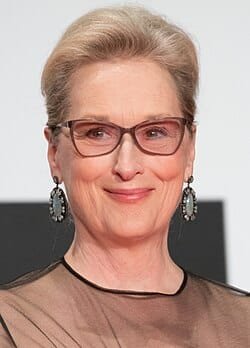
“Meryl Streep from ‘Florence Foster Jenkins’ at Opening Ceremony of the Tokyo International Film Festival 2016 (33644504135) (cropped)” by Dick Thomas Johnson from Tokyo, Japan is licensed under CC BY 2.0.
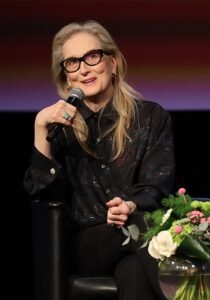
“Meryl Streep interview at Festival de Cannes 2024 (cropped)” by Kevin Payravi is licensed under CC BY-SA 4.0.