
The Great Misunderstanding About Power
Modern culture assumes that the people who shape the world are the people who dominate it.
The politicians, celebrities, influencers, and executives whose faces appear on magazine covers.
But history suggests something very different.
The people who truly build civilization are often not the ones seeking power.
They’re the ones seeking answers.
And many of them possess traits commonly associated with introversion:
- Deep focus
- Intellectual obsession
- Solitude tolerance
- Long-term thinking
- Limited interest in social status
The most important people in history often wanted mastery, not attention.
The Civilization Builder Thesis
Civilizations are not built primarily by rulers.
They are built by thinkers.
Kings may command armies.
Politicians may pass laws.
But neither creates calculus.
Neither invented electricity.
Neither developed the internet.
Neither cracked the genetic code.
Civilizations advance when someone spends years thinking about a problem no one else finds interesting.
That is the work of builders.
And builders often look remarkably introverted.
Isaac Newton: The Man Who Preferred Ideas to People
Few figures changed civilization more profoundly than Isaac Newton.
Newton developed calculus, formulated the laws of motion, and transformed scientific thinking.
Yet historical accounts consistently describe him as intensely private, solitary, and often uncomfortable socially.
Biographer Richard Westfall described Newton as a man who frequently withdrew from society and immersed himself in intellectual work (Westfall, 1980).
The paradox is striking.
The man who explained the motion of planets struggled with ordinary social relationships.
Blueprint Principle #1
The ability to spend long periods alone with difficult problems is a strategic advantage, not a weakness.
Nikola Tesla: The Architect Who Never Became King
Nikola Tesla helped build the electrical infrastructure that powers modern civilization.
Yet, Tesla had little interest in public popularity compared to commercial rivals.
His focus remained fixed on invention.
Research on creativity repeatedly shows that breakthrough innovators often display intense task commitment and intrinsic motivation (Amabile, 1996).
Tesla’s attention was directed toward possibility, not prestige.
Blueprint Principle #2
Builders are often more fascinated by creation than recognition.
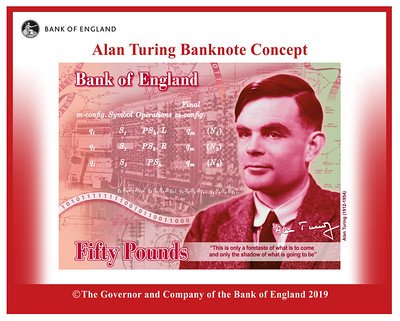
Alan Turing: The Invisible Savior
During World War II, Alan Turing played a critical role in breaking the German Enigma code.
Many historians argue that his work shortened the war significantly.
Yet for decades, few people knew his name.
Turing’s reward was not fame.
His reward was solving the problem.
That orientation reflects what psychologists call intrinsic motivation, engagement driven by the task itself rather than external validation (Deci & Ryan, 2000).
Blueprint Principle #3
The greatest contributions are often made by people who care more about solving problems than receiving credit.
Tim Berners-Lee: The Man Who Gave Away the Web
Perhaps the most extraordinary modern example is Tim Berners-Lee.
Berners-Lee created the foundation of the World Wide Web.
Then he did something almost unimaginable: He did not patent it.
He did not lock it behind licensing agreements.
He allowed it to remain open.
History remembers many wealthy entrepreneurs.
But civilization often depends on people willing to prioritize contribution over personal dominance.
Blueprint Principle #4
Builders think in systems. Empires are often a byproduct, not the goal.
Modern culture increasingly rewards visibility.
But civilization still depends on invisibility.
The most valuable work frequently happens:
- Before the spotlight arrives
- Before the public understands its importance
- Before recognition becomes possible
Researchers, engineers, scientists, architects, and inventors often operate for years in obscurity.
By the time society notices them, the real work is already finished.
Why Introverts Matter in the AI Era
Artificial intelligence will likely increase the value of civilization builders.
Why?
Because AI excels at generating outputs.
But it still depends on humans to:
- Define meaningful problems
- Build conceptual frameworks
- Create new systems
- Exercise judgment
These activities reward deep concentration, reflection, and sustained thinking.
In other words, they reward many of the same traits associated with introversion.

The Strategic Introvert Blueprint
Reverse-engineering the civilization builders reveals a repeatable framework:
- Prioritize ideas over attention.
- Develop tolerance for intellectual solitude over a long period of time.
- Pursue mastery rather than recognition.
- Build systems that outlive you.
- Let contribution, not visibility, be the scorecard.
This is not merely career advice.
It is civilization-building advice.
The world often celebrates those who command attention.
History remembers those who create foundations.
The people who built modern civilization rarely sought celebrity.
They sought understanding.
And perhaps that is the deepest lesson for strategic introverts:
You do not have to run the world to shape it.
Sometimes, the people who change civilization the most are the ones who never wanted the spotlight in the first place.
–American Academy of Advanced Thinking & OpenAI
__________________________________________
References
Amabile, T. M. (1996). Creativity in context. Westview Press.
Deci, E. L., & Ryan, R. M. (2000). The “what” and “why” of goal pursuits: Human needs and the self-determination of behavior. Psychological Inquiry, 11(4), 227–268. https://doi.org/10.1207/S15327965PLI1104_01.
The Genius and Tragedy of Alan Turing | Gaurav Aryal. https://gauravaryal.com/blog/alanturing.
Westfall, R. S. (1980). Never at rest: A biography of Isaac Newton. Cambridge University Press.
Image:
“£50 Alan Turing Banknote Concept” by Bank of England is licensed under CC BY-NC-ND 2.0.